
If you’ve ever reached for a heat patch to soothe a sore back, you’re participating in a tradition that is thousands of years old. Humans have instinctively used heat to heal since the beginning of time. However, the journey from a heated river stone to the sleek, air-activated patches we use today is a masterclass in innovation and safety.
As someone who works closely with medical device standards, I find this history particularly moving because it’s really a story about our search for freedom from pain.
1. The Ancient Roots: Thermal Therapy 1.0
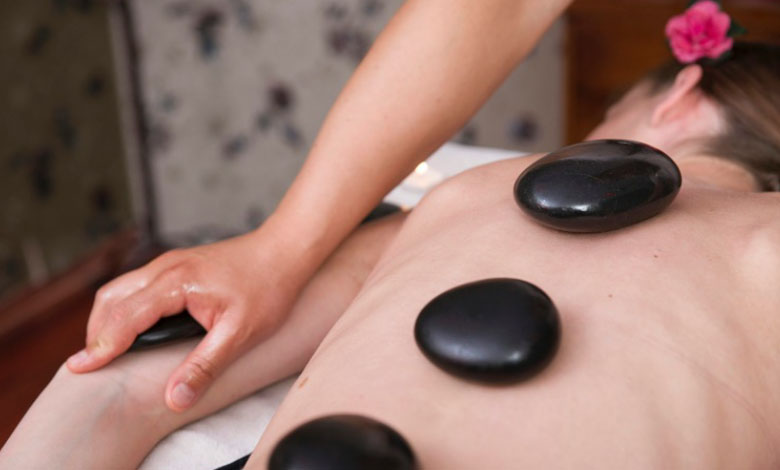
Before pharmacies and FDA regulations, heat therapy was simple. Ancient Egyptians and Greeks used hot wraps and sun-heated stones to treat muscle aches. The principle was the same then as it is now: vasodilation. Heat opens up the blood vessels, bringing fresh oxygen and nutrients to damaged tissue while quietening pain signals sent to the brain.
2. The Era of the “Tethered” Heat
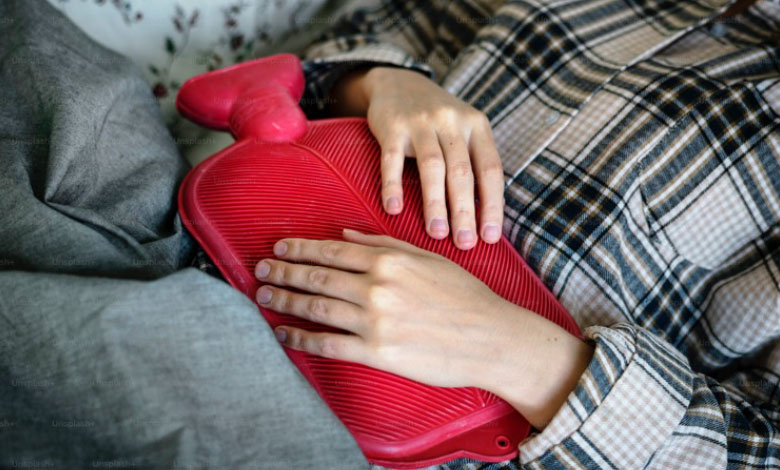
Fast forward to the early 20th century. This was the era of the Hot Water Bottle and, later, the Electric Heating Pad.
- The Problem: While effective, these methods were “tethered.” You had to stay in bed, stay near a stove, or stay plugged into a wall.
- The Risk: Early electric pads lacked the sophisticated sensors we have today, leading to frequent overheating.
3. The 1970s: The “Air-Activated” Breakthrough
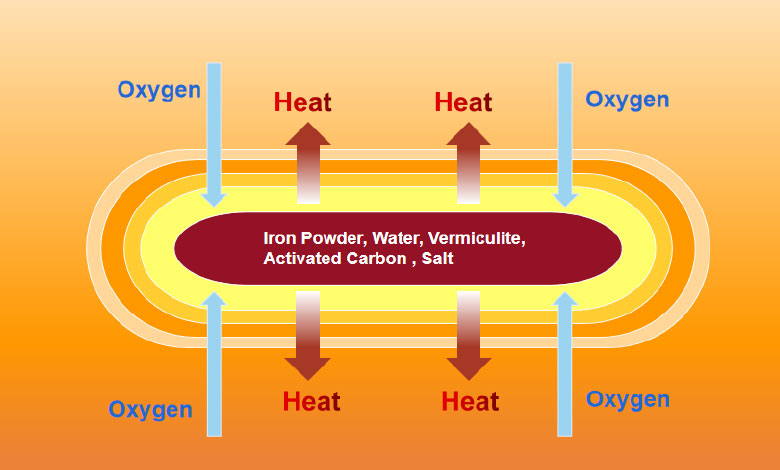
The real “Big Bang” for the modern heat patch happened in Japan. Inventors discovered that they could harness a simple chemical reaction—the oxidation of iron—to create a portable, steady heat source.
By mixing iron powder, activated charcoal, salt, and water, they created an exothermic reaction that could be controlled. When the package is opened, oxygen flows in, the iron “rusts” at a high speed, and heat is released.
4. The Modern Standard: Precision and Ergonomics
In the last 20 years, the focus has shifted from “just getting hot” to “therapeutic precision.” This is where the industry became much more professional and regulated.
- Clinical Consistency: Modern patches are engineered to hit a “sweet spot”—usually around 40℃ (104℉). This temperature is high enough to be therapeutic but low enough to minimize the risk of burns over an 8-hour period.
- The Regulatory Shift: In the US, the FDA classifies these as Class I or II devices. In Europe, the transition to MDR (Medical Device Regulation) has ensured that these patches aren’t just “warmers,” but validated medical tools with proven safety profiles and biocompatible adhesives.
- Anatomical Design: We moved away from “one size fits all” to patches shaped specifically for the neck, the wrist, or the menstrual cramp area.
5. Why the History Matters to You
When you use a modern air-activated patch, you aren’t just using a “sticker.” You are using a device that is the result of decades of chemical engineering and safety testing.
I often tell my friends: the reason I prefer these over old-fashioned methods is the reliability. In a professional context, we look for “dose consistency.” A modern patch gives you a consistent “dose” of heat for 8 to 12 hours, something a hot water bottle (which starts hot and cools rapidly) simply cannot do.
The Future: What’s Next?
We are already seeing the next frontier: “Smart” Heat. Imagine patches that sync with your phone to monitor skin temperature or patches that combine heat with targeted ingredient delivery.
But for now, the air-activated patch remains the gold standard for convenience. It’s a bit of ancient wisdom, refined by modern science, tucked away in your bag for whenever life gets a little too “stiff.”